Locksmith for Flats London – 24/7 Emergency Response
Most of the work we do across Victoria, Westminster and Pimlico involves flats and apartments. These buildings all behave differently. Some have tight communal doors. Some use old night latches that stick in the frame. Some rely on euro cylinders in multipoint strips that have been used thousands of times. A dedicated locksmith for flats London needs to work with all of these without causing damage, and that is what we do daily across Central London.
We are an independent team, insured, experienced and working only in this area. We are not Master Locksmiths Association certified. Our work is practical and based on what we see on the ground. If you are locked out, if the latch is not lining up, if the key is stuck in the flat door, or if the communal door lock is causing issues for the building, we sort it out quickly. Most calls involve gaining entry, repairing worn mechanisms or replacing front door locks with something more suitable.
Flats bring their own problems. Doors swell with temperature changes, communal frames shift slightly, and older mortice cases develop enough wear for the key to drag when turning. We see it all the time. Once we are at the property, we check the alignment, the lock type and how the mechanism responds to pressure. That tells us exactly how to open, repair or replace it without unnecessary cost or disruption.
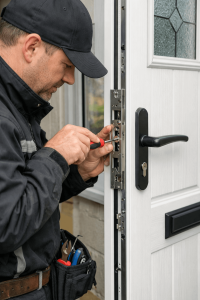
Emergency lockouts are the most common. Someone steps into the corridor for a moment, the door shuts behind them, and the keys are inside. It is very common for night latches and rim cylinders, which are built to lock as soon as the door closes, to be the cause of lockouts in flats all around London. The auto lock feature is great for security, but it catches people out constantly. As an emergency locksmith for flats London, we see this at all times of day and often during the nighttime.
Another common problem is general wear and tear. This, unfortunately, is rather unavoidable. Flats in Central London deal with heavy use. If the latch is scraping the keep, the cam position inside the cylinder is worn, or the multipoint strip is out of alignment, the door becomes hard to open. Then one morning, it stops turning entirely. In these cases, we gain entry using non-destructive techniques and assess whether the lock can be repaired or if a lock change is the cleaner fix.
Top tip to stop this from happening… a little maintenance every now and then!
Now, this is quite common, especially in older communal areas, and, it isn’t typically something you yourself can do preventative maintenance for… But, communal door locks in older buildings often have worn rollers, stretched springs or a striking plate that no longer sits straight. Ten different residents using ten different sets of house keys puts strain on the mechanism. We repair and replace communal locks, adjust the frame and make sure access stays smooth for everyone living there.
Keys being stuck in the lock is also a very common situation, and one that we’ve got tons of experience dealing with. A stretched keyway, worn cam or misaligned latch can make a key stick partway through the turn. If you force it, the key snaps. We remove stuck keys, repair the mechanism and check whether the cylinder is still reliable. If not, we fit a new lock with the correct size and profile for the door.
It is important to note that every door behaves differently. Which means we will always start with quick checks that tell us what direction to take.
Now, flats around London use a mix of front door locks including night latches, rim cylinders, euro cylinders, mortice locks and smart locks. Each one has its own behaviour when worn. Once we confirm the lock type, we know how to open it and what replacement options are suitable.
Wooden flat doors are common in Westminster conversions and allow more adjustment on the hinges and frame. uPVC doors behave differently. Their cylinders sit inside multipoint gearboxes, and if the gearbox is worn, the key turns unevenly. Composite doors need cylinders that sit flush with the external plate to avoid strain on the bolts.
Dropped doors are extremely common in flats. If the door drops by even a few millimetres, the latch hits the keep early and the key feels tight. We check the hinge alignment, latch height and door frame movement. A basic hinge adjustment can fix long standing access problems.
Some people want simple replacements. Some want high security locks to protect personal items or business premises stored inside. Some want smart locks for easier access. We match the lock to the property and the building’s fire and access requirements.
On older doors, the bolt throw and roller tension tell us how close the mechanism is to failing. If the internal parts are too worn to rely on, we recommend a lock change. If they can be repaired, we do the job on site and avoid unnecessary cost.
Flat doors require careful handling. We always start with the least invasive method and only replace parts if the mechanism is too worn to trust.
Most flat lockouts can be solved with non destructive entry. If the lock is functioning and the door is properly aligned, we manipulate the latch or operate the cylinder without harming the mechanism. This is the cleanest approach and avoids extra cost.
Night latches often fail because the latch roller catches on the keep. We use precise tools to retract the latch and open the door cleanly. If the night latch body is worn, we replace it with a suitable model that fits the door thickness.
Euro cylinders fail in predictable ways. The cam stops turning, or the key drops lower in the keyway. We can gain entry by adjusting cam pressure and manipulating the pins. If the cylinder is cracked or showing signs of lock snapping, we remove it and install an anti snap replacement.
Mortice locks become stiff when the levers or curtain wear. If the key no longer lifts the levers properly, the door will not unlock. We open mortice locks carefully and assess the mortice case to see whether it needs replacing or adjusting.
If the key is stuck, we safely remove it and inspect the cylinder. Worn cylinders often grip the key too tightly. Old flat doors in Central London often hide this problem until someone forces the key a little harder than usual. After extracting the key, we either repair or replace the cylinder depending on its condition.
Replacing locks in flats requires knowing what will fit the door, meet the building’s safety regulations and avoid issues with the communal door.
uPVC and composite doors rely on multipoint locking strips. If the cylinder is the wrong size, it strains the gearbox. We fit correctly sized anti snap cylinders and test how smoothly the gearbox engages. This makes a noticeable difference to daily use.
Night latches are widely used in older London buildings. Replacing the rim cylinder and latch body is common when the internal spring wears. We fit new models that sit flush on the door and provide better day to day reliability.
Five lever British Standard mortice locks are standard for secure wooden flat doors. When the mortice case wears, the bolt becomes weak. We replace worn mortice locks and make sure the bolt throw sits square in the keep.
More residents are choosing smart locks. Flats benefit from easy access and clear audit trails for guests or trades. Smart locks must be fitted correctly to avoid strain on the mechanism. We explain which models work properly on wooden, uPVC and composite flat doors.
Additional locks, upgraded cylinders, door chains and London bars can all add strength. We only recommend these when we believe they are truly needed. Residential and commercial properties sometimes benefit from a free survey, which helps us check the frame, the fittings and the lock types already in place.
You can read more about lock replacement options in our locksmith services section.
Communal doors are often used hundreds of times per day. That kind of use wears down rollers, strike plates and cylinders quickly.
If the frame has moved, the latch alignment is off and the door becomes hard to open or close. A simple adjustment can solve long running access issues for the whole building.
Communal locks often fail because the spring becomes tired or the strike plate is worn. We repair these mechanisms and check the closing pressure so the door works smoothly again.
Large buildings often need restricted keys or high security locks. We install cylinders that allow controlled access while staying suitable for the specific housing used by the building.
Over time, keys are cut by several people. This puts stress on the cylinder. We offer key cutting and new keys for the replacement cylinders as needed so residents have consistent key profiles.
We work mainly in Victoria, Pimlico and Westminster but we regularly attend flats across Central London. Many calls also come from east London, south London and parts of west London when someone needs a professional locksmith in London who handles flat specific issues.
We are a local locksmith team that focuses on this area. We are mobile, fully equipped and fully vetted. Most jobs are sorted during the first visit.
Most of our daily work stays around Victoria, Westminster and Pimlico, but we regularly help residents suffering lockouts all over London: north London, south London, east London and west London when they need someone who understands flat doors. These buildings all use different door locks. Some have old mortice locks that have been on the door for decades. Some rely on euro cylinders in uPVC door systems, and some have composite doors that need a very specific lock size to avoid strain on the gearbox.
Flats outside Central London often sit in larger residential and commercial properties. Now, all that means is higher foot traffic, communal frames that loosen over time and locks that wear faster. The first thing we do when we attend is checking the way the latch sits in the keep, the behaviour of the internal mechanism and whether any additional locks or high security locks would be useful. And, if the door needs a lock change, we install a new lock that suits the frame rather than a part that only fits on paper.
Quite often, customers will call either due to lost keys or locking keys inside the flat. Both situations are common across London, but we aim to gain entry using non destructive entry and get the door open without pushing damage onto the frame. Once inside, we can repair, replace or upgrade the lock depending on what the flat needs.
Every flat has slightly different security needs. Some people want a simple repair. Some want extra security. Some want a full installation of new locks or smart locks. As a local locksmith we start with a basic survey of the door so we know what direction to take.
We look at the door material, the lock type and the wear on the cylinder and latch. Wooden doors allow more adjustment. A uPVC door often points to issues in the multipoint strip. Composite doors behave differently again. Flat doors take more use than house doors because several people open and close them every day. We check whether the internal parts have started to feel loose or gritty. That tells us whether the lock will fail soon or if a clean repair is enough.
Some jobs are simple. A broken key in the keyway. A loose knob on a night latch. A latch that drags slightly. Some jobs involve a failing gearbox or a mortice case with worn levers. Either way we explain the locksmith cost clearly before starting the job. We carry new keys, cylinders and tools on the van so we can complete most repairs or replacements during a single visit.
Many London flats sit above business premises or share entrances with commercial properties. These doors take constant use. The communal door lock becomes loose, the strike plate shifts or the cylinder wears after years of different keys being used. As mobile locksmiths we handle both residential and commercial properties where access must stay reliable for everyone who uses the building.
Some commercial properties use higher grade locks or additional locking points. Some have window locks, garage door locks or internal office doors connected to the same access route as the flats above. We check everything in the access chain so that one weak part does not cause problems for the rest of the building.
When locks need changing, we install suitable replacements and supply new keys for residents and businesses using the door. We also explain options for key cutting, keyed alike cylinders and other cost effective ways of keeping access simple. If the building wants a free survey to look at future upgrades, we can arrange that too.
If you ever need emergency help or non destructive entry because a door has jammed, you can reach the local team through our emergency locksmith Victoria page. This keeps the property secure without unnecessary disruption.
Locksmith cost varies depending on the lock type, the time of day, the condition of the mechanism and whether parts need replacing. Emergency lockouts are often straightforward. Repairs and installations take longer if the frame is misaligned or if the lock has broken internally.
We always explain the situation clearly before starting the work. There are no surprises. If the job is simple, we keep it simple. Thats just what we do as a locksmith company providing professional services.
If you cannot open the door, if the keys are inside or if a lock has failed completely, call us. As providers of London locksmith services, we work across Central London and gain entry using clean, non destructive techniques whenever possible. We arrive with the tools, the replacement parts and the experience to secure the door properly.
You can reach us any time through our contact page or through the central number on our emergency service listings. Quick, local and focused on London flats.
Contact us today to discuss our professional locksmith services.
Yes, most flat lockouts and repairs are completed during the first visit.
Usually within 30 minutes. In Central London we arrive quickly. We handle emergency lockouts throughout the day and often into the night.
Yes, we handle it all, from entry, repairs, replacement locks, communal door work and upgrades.
No, we are professional London locksmiths but we are not Master Locksmiths Association certified. We operate independently.
Yes, we are able to replace cylinders, repair gearboxes and adjust multipoint strips on uPVC doors.
We will always use non destructive entry to gain access (wherever possible). This avoids damaging the lock.
Yes, we’re professional locksmiths, and we handle both residential and commercial properties across Central London.
Yes, almost all of our work is in Central London but we also attend flats in south London when needed.